Human existence can be distilled into a single latent motive force: increase. Human systems generate an intersubjective feeling that increase is constant and continuous, and organized human activity orients toward reinforcing this sense.
Increase tends toward quantitative assessment - a greater size or amount. It is an extrinsic, tally-oriented expansion that is inherently additive. The simple addition of units to an existing total does not necessarily alter the inherent nature or quality of the entity in question.
Growth, however, encompasses differentiation, maturation, and the emergence of new structures or functions. Growth is what living systems do, a process that presupposes self-regulation, an intrinsic metamorphosis that is often qualitative and self-organizing.
A historical and psychological analysis attentive to these distinctions must regard increase as a force indifferent to morality, selfhood, or even success. It is a powerful interpretive lens that, when embedded in historical narrative, has the potential to recast familiar figures as instruments of an impersonal, almost metaphysical process irrespective of intent.
Genghis Khan’s empire emerges in recorded history as the most expansive contiguous dominion. He put aside differences of race, religion, ethnicity, and culture because such differences impeded the purely additive calculus of conquest - origins and beliefs mattered not in the obsessive pursuit of increase. The Khan valued growth only in military technology because it expanded his capacity for conquest and accumulation.
Who has heard that the Nabateans took an alternative approach? They anticipated the will to increase would be exploited, and they attempted to codify a rejection of accumulation. As Hieronymus of Cardia observed: "It is the Nabateans' custom neither to plant grain, set out any fruit-bearing tree, use wine, nor construct any house, and if anyone is found acting contrary to this, death is his penalty. They follow this custom because they believe that those who possess these things are, in order to retain the use of them, easily compelled by the powerful to do their bidding."
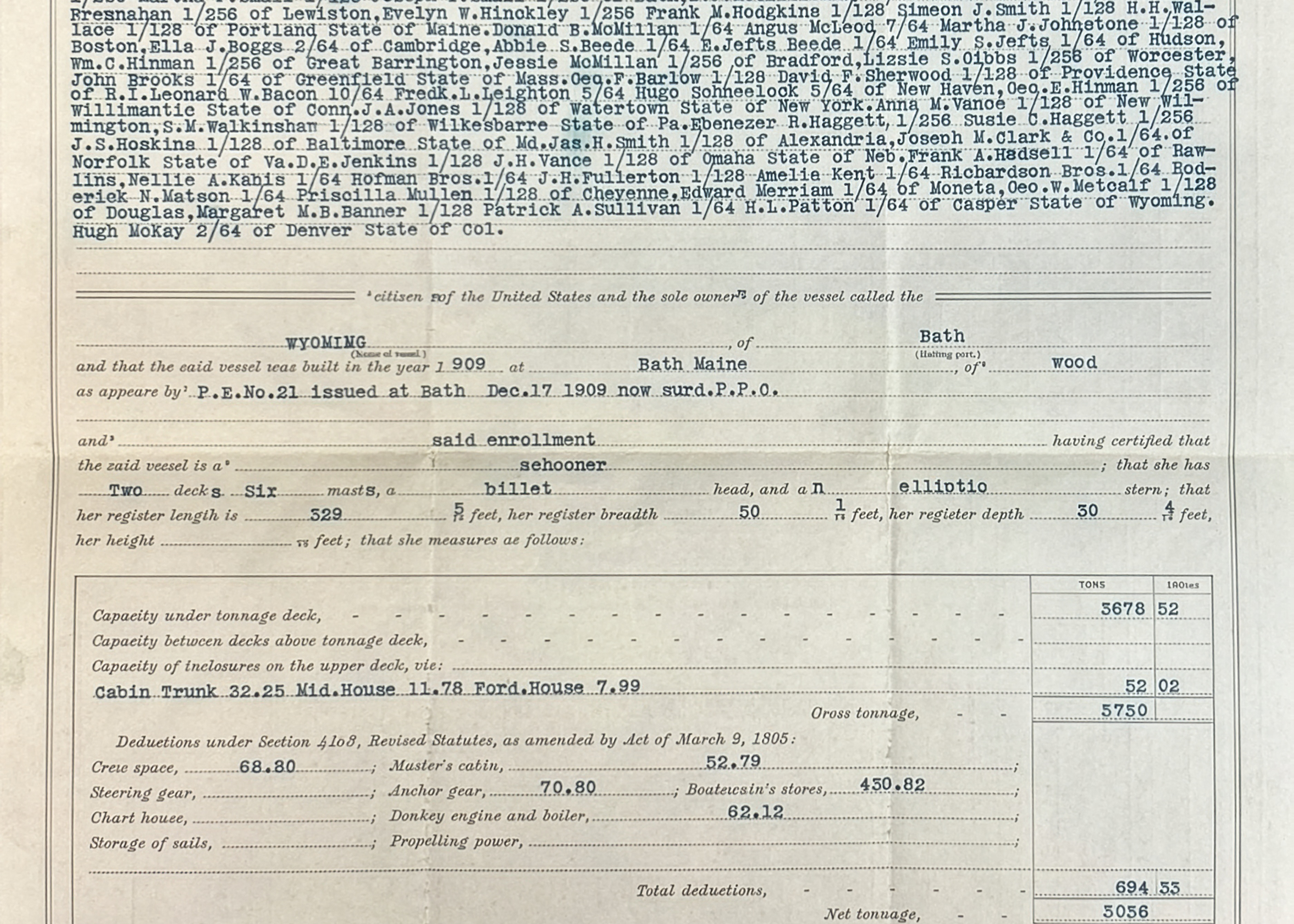
Maine-built ships were both the symbol of and the means to increase. Their arc begins with the perfection of the brig, eschews increase for growth in clipper ship speed, and then returns in the schooners to the greatest increase of which a wooden ship was capable.
In 19th-century shipbuilding, "the ways" were inclined wooden tracks on which ships were built and launched into the navigable rivers of Maine. Each launching was the local town's day of celebration, for they knew their increase was close at hand and that increase would continue drawing them into its hold. The more launchings, the more increase.